

Message from the Directorを更新しました(Jan 1,2025)。
Exploring the History of Medicine, Part 51: Florence, Part 31

June 1, 2026
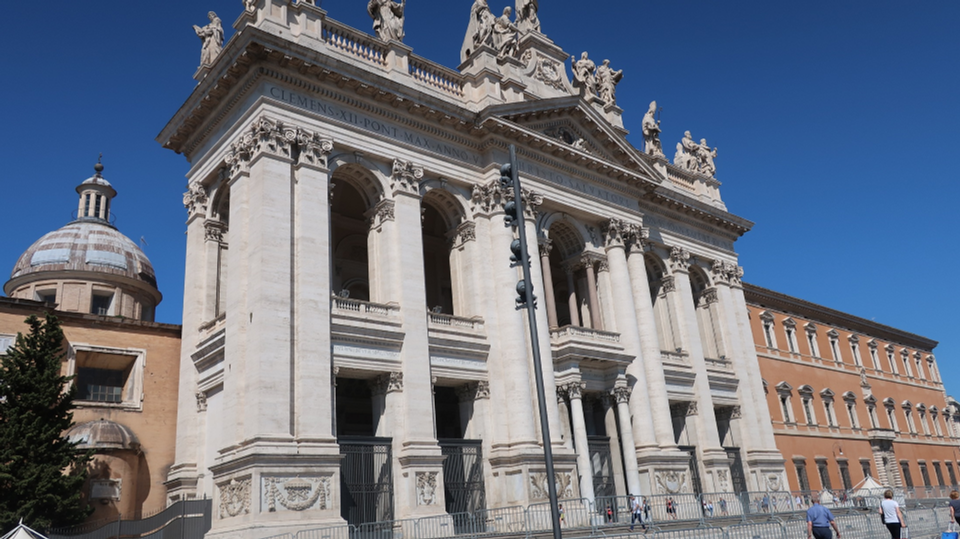
The Archbasilica of Saint John Lateran
The Archbasilica of Saint John Lateran is the most important and oldest church in Rome—and indeed, in the entire world.
In 313 AD, the Roman Emperor Constantine the Great issued the Edict of Milan, granting freedom of religion throughout the Roman Empire and officially recognizing Christianity for the first time.
The following year—more than 1,700 years ago—Constantine founded this magnificent basilica.
Among Rome's four major papal basilicas—the Archbasilica of Saint John Lateran, St. Peter's Basilica, Basilica of Saint Mary Major, and Basilica of Saint Paul Outside the Walls—it is the oldest.
For nearly one thousand years, until the papacy moved to Avignon in the 14th century, it served as the spiritual center of all Catholic churches.
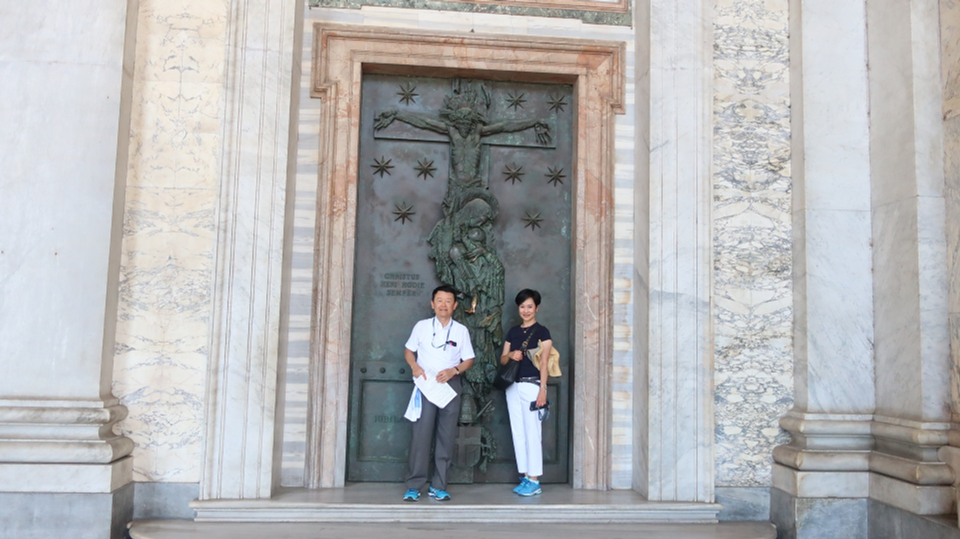
Within the basilica stands a large door known as the Porta Santa ("Holy Door").
Carved in relief on its surface are images of the Virgin Mary and the Child Jesus, as well as Christ crucified on the Cross.
The Holy Door is opened only during a Holy Year (Jubilee Year).
In the Catholic Church, a Holy Year is a special year during which pilgrims visiting Rome are granted extraordinary spiritual indulgences.
Since the 14th century, such years have been celebrated at intervals of several decades.
The word porta is Latin for a city gate or entrance in a defensive wall.
In English, the related word port refers to a harbor.
Both porta and port derive from the Latin verb portare, meaning "to carry" or "to transport."
A harbor is, in essence, the gateway through which goods are brought into and carried out of a city or nation.
English words such as portable (able to be carried) and porter (a person who carries luggage, especially in hotels and stations) are also derived from the same root.
The concept appears in anatomy as well.
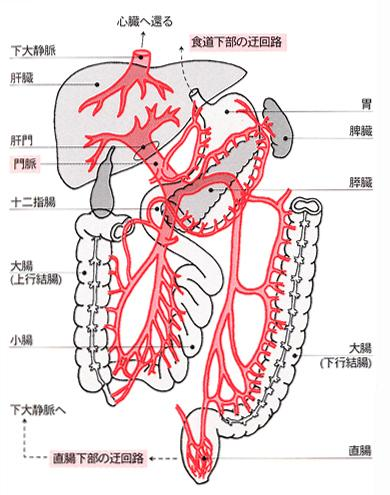
One important blood vessel is the portal vein (vena portae in Latin).
This vessel collects nutrient-rich blood absorbed from the stomach and intestines and carries it to the entrance, or "gate," of the liver.
Because it is the vein that "carries" blood to the liver's "gate," it is called the portal vein.
In the Milan series (March 2021), the Venice series (November 2021), and the Florence series (January 2023), I discussed the "Head of Medusa" (Caput medusae).
This term refers to one of the collateral venous pathways that develop in patients with liver cirrhosis when elevated portal venous pressure prevents blood from entering the liver normally.
The blood is therefore forced to bypass the liver and return to the heart through alternative routes.
The network of enlarged veins visible beneath the skin resembles the snakes covering the head of Medusa, which is why the condition is known as the "Head of Medusa" (Caput medusae).
To be continued
コメントをお書きください